I-RIM 2026 - Robotic Rehabilitation Workshop
Lightweight Lower-Limb Exosuits: towards new multimodal approaches for rehabilitation and assistance
The workshop
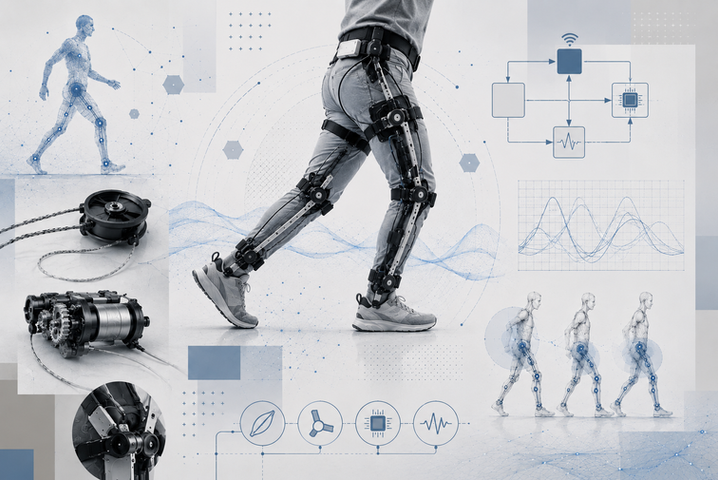
Motivation: Lower-limb exosuits are emerging as a new generation of wearable robotic systems capable of providing assistance while preserving the user's natural biomechanics and promoting active participation during movement. Compared with conventional rigid exoskeletons, lightweight wearable technologies offer improved comfort, usability, reduced metabolic burden, and long-term integration into activities of daily living. Recent advances in clinical experience, compliant actuation, cable-driven transmissions, adaptive control algorithms, machine learning, wearable sensing, and combined multimodal approaches based on Functional Electrical Stimulation (FES) are opening new perspectives for personalized assistance, rehabilitation, and long-term support in real-world environments. Bringing together these complementary technologies represents a key step toward the development of more versatile-effective, and clinically translatable wearable robotic systems.
Goals: This workshop aims to bring together researchers from robotics, biomechanics and control engineering to discuss the latest developments and future challenges in lightweight wearable robotics.
The workshop will:
• present the complementary clinical roles of rigid exoskeletons and lightweight exosuits
• present the state of the art in lightweight lower-limb exosuits mechatronics;
• explore multimodal control architectures for gait assistance;
• present adaptive oscillators and machine-learning techniques for gait phase estimation and intention detection;
• discuss the integration of Functional Electrical Stimulation with robotic assistance;
• promote collaboration between academia, clinicians and industry.
Main Topics:
• Clinical experience with wearable robots
• Lightweight lower-limb exosuits
• Cable-driven wearable robots
• Adaptive gait assistance
• High-level control architectures
• Adaptive oscillators
• Machine learning for locomotion
• Functional Electrical Stimulation
Keywords: Lower-limb exosuits, Wearable robotics, Cable-driven actuation, Adaptive control, Adaptive oscillators, Machine learning, Functional Electrical Stimulation, Human-centered design, Assistive robotics
The topics presented in this workshop have been developed as part of the INAIL–IIT Project PR23-RR-P1 "FeatherEXO".
Workshop Sessions

Main Topics
• Clinical experience with wearable robots
• Lightweight lower-limb exosuits
• Cable-driven wearable robots
• Adaptive gait assistance
• High-level control architectures
• Adaptive oscillators
• Machine learning for locomotion
• Functional Electrical Stimulation

Networking
The workshop aims to foster interdisciplinary discussion between engineers and clinicians, promote collaborations within the rehabilitation robotics community, and stimulate future research initiatives focused on the clinical translation of robotic technologies.

Q&A
Participate in an interactive Q&A session, where you can ask questions and discuss concepts. This is your chance to clarify doubts and expand understanding.